
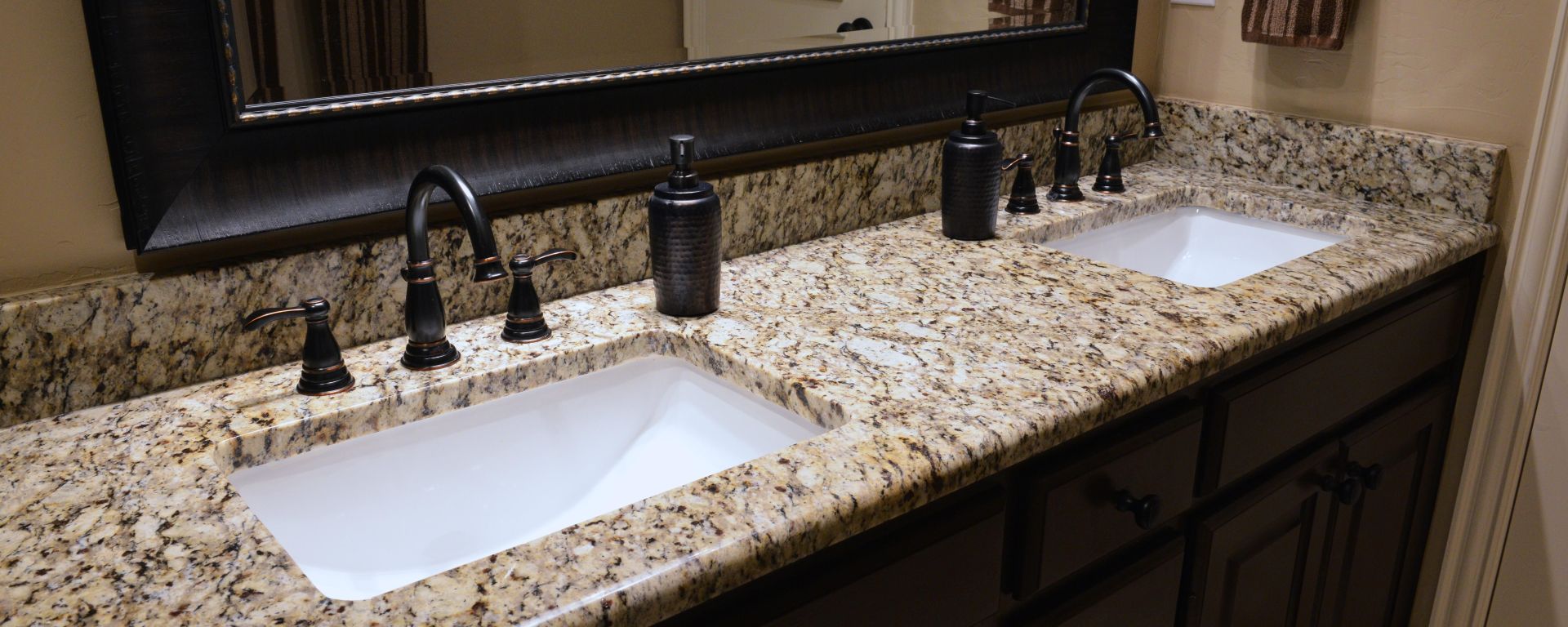
When individuals talk about their ideal countertop, they describe it in great depth, including the material, colour, pattern, and sometimes even the form if they’re also detailing their kitchen plan. However, you don’t frequently hear them discuss stone vanity top edge finishing. It might be due to the overwhelming amount of edge finishing options: there are traditional finishes, contemporary finishes, and even laminated edge finishes – and those are just broad categories. Furthermore, just to add to the confusion, everyone appears to have a different name for each edge.
Most people don’t consider what sort of countertop edge they want until their stone vanity top maker asks them, which is great because it’s a finishing element that differs from one manufacturer to the next. At the end of the day, you’ll need to talk to your countertop manufacturer about what edge treatments they have available and which edge is ideal for your kitchen design. Here are a few countertop edge varieties to consider, along with their more widely accepted names, to aid you with the conversation:
Square edge
Because it’s just straight 90-degree edges all around, this is the easiest finish to achieve. Keep in mind that the stone vanity top edges will never be perfectly straight and crisp; they will always be somewhat softened. This is done for two reasons: safety (to reduce the danger of harm when bumping into edges) and convenience. This edging offers your kitchen a sleek, modern appearance.
Eased edge
The relaxed edge is more comfortable to rest against thanks to a little more rounded top edge, but the square edge retains its clean, modern look.
Bevel edge
Another square edge variation is when the top edge is cut at a 45-degree angle to slope downward. It’s a subtle technique to draw attention to the countertop since light reflects off the edge at a different angle than the surface, creating a lovely gem-like contrast that complements the stone overall. The bevel stone vanity top edge looks great in a contemporary kitchen because of its clean angles.
Bullnose edge
The bullnose eliminates all angles and harsh edges, resulting in a smooth, semi-circular edge profile. It’s a versatile edge that may be used in any design. One disadvantage of this edge is that any spills on the counter may run down the curved edge and into the cabinets below. It will be OK as long as you wipe up all liquids quickly before they reach the edge.
Demi-Bullnose edge
This stone vanity top edge is a direct response to the complete bullnose’s spilling disadvantage. On top, it maintains the same curved aesthetics, but the bottom edge is kept on a point so that spills fall to the floor instead.
Mitred edge
The beauty of this edge is that it creates the appearance of a thicker slab on the countertop. Although this element, like classic ornate edges, may make the countertop the focal point of the kitchen, the mitred edge’s sleek lines allow it to be employed in a contemporary design as well.
Next time check with your local stone vanity top manufacturer early on in the design process to see what edge alternatives are available.
 Information World